Hyundai Alcazar : Hyundai’s Alcazar has stayed relevant in India by balancing space, comfort, and a premium feature set.
Positioned as a three-row SUV, it continues to attract buyers who want something more polished than a regular midsize SUV but do not want to move all the way into a full-size premium category.
The big reason behind its ongoing interest is the facelifted version, which brought a more modern look and a richer cabin experience.
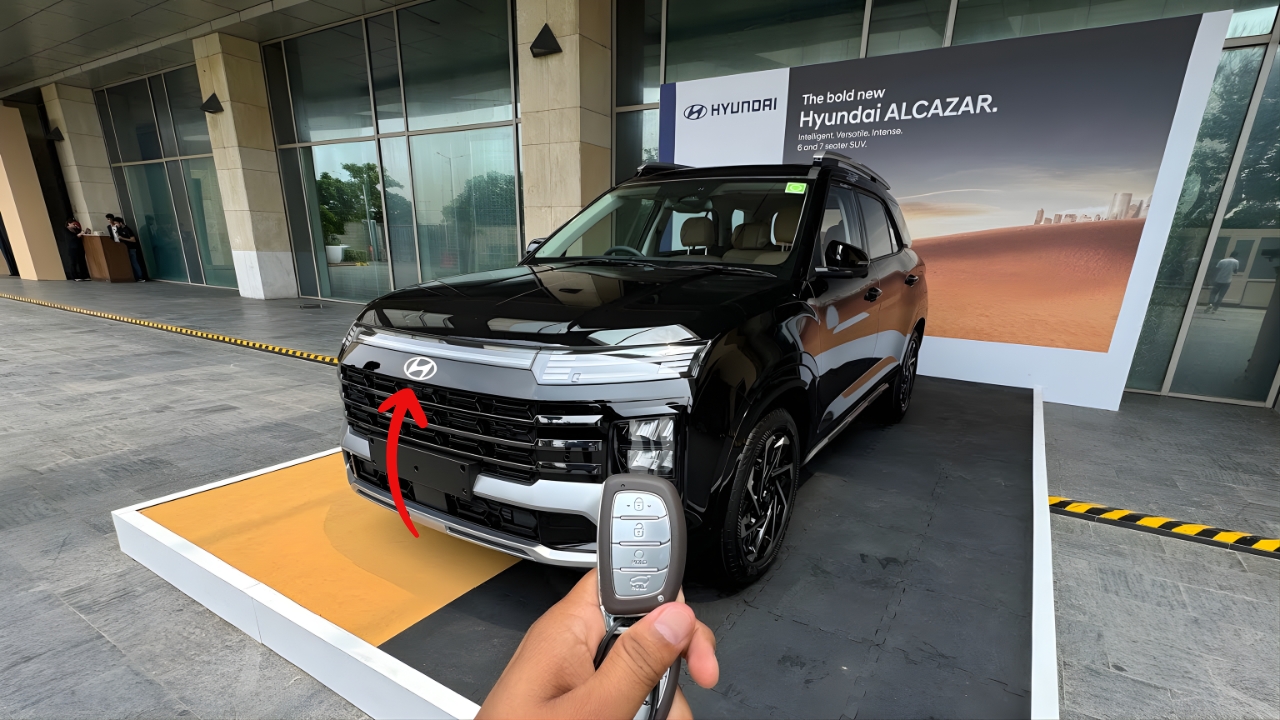
The refreshed styling, updated lighting elements, and cleaner rear design gave the SUV a stronger road presence while keeping the overall shape practical for families.
What changed in the facelift
The Alcazar facelift introduced a redesigned front grille, updated front and rear fascia, and full-width LED lighting elements that made it look closer to Hyundai’s latest global design language.
These changes were not just cosmetic; they helped the SUV feel more premium and more competitive in a crowded segment.
Inside, the cabin received a more upscale touch with a dual-screen layout, soft-touch materials, ambient lighting, and a black-and-brown theme that adds warmth to the interior. The overall effect is that the Alcazar feels built for long family drives, where comfort matters as much as style.
Comfort remains the main story
One of the Alcazar’s biggest strengths is how seriously it takes passenger comfort. The SUV offers both six-seat and seven-seat layouts, which gives buyers flexibility depending on whether they want captain seats in the second row or an extra seating position. That makes it suitable for larger families as well as buyers who prefer lounge-like second-row comfort.
Hyundai has also packed in features such as ventilated front seats, a panoramic sunroof, a Bose audio system, wireless charging, connected-car functions through Bluelink, and seat adjustments that make day-to-day use easier. These are the kinds of touches that make the Alcazar feel more expensive than its size alone would suggest.
Engine options and driving character
The Alcazar is offered with a 1.5-litre turbo-petrol engine and a 1.5-litre diesel engine, giving buyers a choice between refinement and efficiency.
The turbo-petrol is tuned for stronger response, while the diesel remains appealing for those who do more highway running or value long-distance usability.
The facelifted version also moved away from the older naturally aspirated petrol setup and focused on more modern turbocharged powertrains.
That change gave the Alcazar a more current mechanical package and aligned it better with what Indian SUV buyers now expect from a premium family vehicle.
Why the Alcazar still matters in India
India’s SUV market is crowded, but the Alcazar has carved out a clear identity. It is not trying to be a rugged off-roader or a sporty machine first.
Instead, it aims to be a comfortable, well-equipped, and polished people mover that looks stylish in city traffic and feels relaxed on long trips.
That positioning matters because many Indian buyers now want a car that can do school runs, office commutes, and weekend family travel without feeling basic.
The Alcazar answers that need with a good mix of design, practicality, and features, which is why Hyundai continues to update it rather than replace it.
Hyundai Alcazar : Recent updates keep interest alive
Recent news around the Alcazar has centered on feature additions, variant reshuffling, and periodic offers in the Indian market.
Hyundai has kept the SUV in the headlines by refining trims and making it more accessible to different kinds of buyers.
Also Read This : Maruti e Vitara launch with 19-inch alloy wheels, fast charging capability and range is 543km
The continued attention suggests that Hyundai sees the Alcazar as an important name in its India lineup. With its mix of premium cabin equipment, multiple seating choices, and modern design, it remains one of the more versatile family SUVs available in the country.